The History of Origami: From Japanese Paper to the Crane as a Symbol of Peace
How a practice tied to Japanese ceremonies became a worldwide pastime, who standardized the diagrams we use today, and why the paper crane carries the symbolic weight it does.

Paper folding can only exist once paper exists, and that obvious point explains a good part of the history of origami. Where paper was expensive, folding was a ceremonial gesture. When paper became cheap, folding became play. When it gained a notation of its own, it became an international language.
Before Origami: Paper
Papermaking emerged in China, and tradition credits Cai Lun with systematizing it around the year 105. The technique took centuries to spread across Asia and reached Japan in the early seventh century. The date most often cited is 610, tied to the monk Doncho, although that attribution is traditional and the documentary evidence for it is not settled.
In Japan, paper met a particular setting. Made from the long fibers of plants such as kozo, washi is considerably stronger than Western paper made from short cellulose fibers. That matters directly to anyone who folds, because it allows repeated creasing without splitting.
Ceremonial Folding
In the early centuries, paper was far too costly to become a pastime. What existed was ritual use: folded wrappers and markers in Shinto contexts and court ceremonies, where the shape of the fold carried meaning. It indicated the nature of the gift, the occasion, the sender.
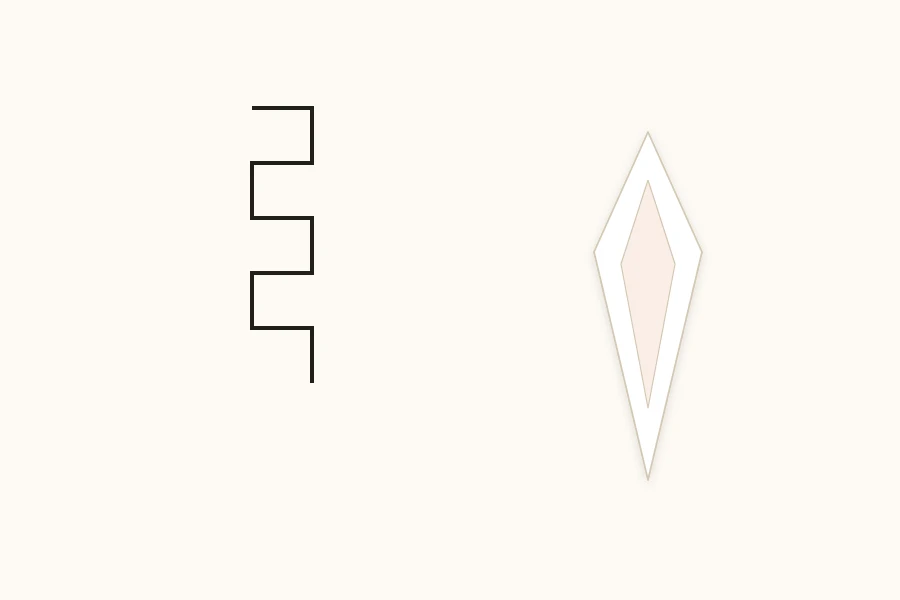
Two traces of this have survived. One is the shide, the strip of white paper folded in a zigzag that hangs at Shinto shrines. The other is the noshi, the folded ornament that accompanies formal gifts in Japan to this day. Neither is origami in the recreational sense, but both come from the same root: giving paper its form with folds, not with glue or cuts.
When Folding Became a Pastime
As paper became widely available during the Edo period (17th to 19th centuries), folding moved from ceremony into everyday life. The best-known printed record of the practice dates from this time: the Hiden Senbazuru Orikata, published in 1797, devoted to ways of folding connected cranes from a single cut sheet.
What the book reveals is worth noting. Models were already established enough to merit publication, and the crane already held a prominent symbolic place.
A Parallel Path in Europe
Paper folding is not exclusively Japanese. It appears wherever paper is affordable, and in Europe it received a specific push in the 19th century, when the German educator Friedrich Fröbel built paper folding into the kindergarten method he created.
Fröbel’s aim was educational: folding taught geometry, symmetry, and coordination. This classroom route spread the practice through the West along a path entirely different from the Japanese one, which is why some traditional European forms, such as the Spanish pajarita, have no direct counterpart in the Japanese repertoire.
The 20th Century: Notation Changes Everything
Until the middle of the last century, learning a new model depended on someone showing you in person or on imprecise written descriptions. What unlocked the international circulation of origami was the standardization of diagrams.
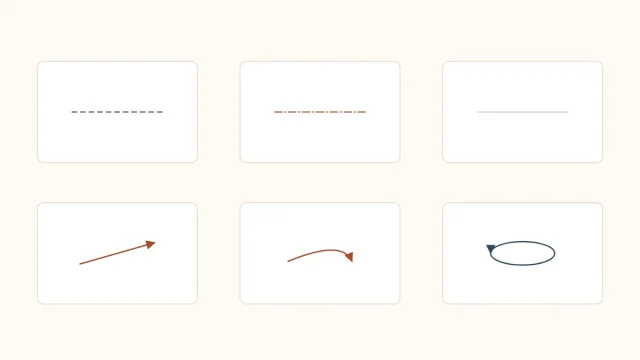
Akira Yoshizawa played a central part in that. The graphic distinction between folds toward and away from the folder had already appeared in earlier Japanese publications, but he introduced action arrows, which show the movement and not only the end state, and began to represent each step in a single perspective drawing.
Samuel Randlett and Robert Harbin adopted this vocabulary, added symbols for specific operations, and published the set in English, which carried the notation beyond Japan. The result is the system now called Yoshizawa–Randlett, described in detail in an OrigamiUSA article on the evolution of the notation.
Yoshizawa is also remembered for another technical contribution: working with dampened paper, which allows soft curves instead of only straight creases and widened what a folded model could represent.
Academic consolidation came later, with organizations such as the Japan Origami Academic Society, dedicated to the study and publication of contemporary origami.
The Crane and Hiroshima
The crane (tsuru in Japanese) was already a symbol of longevity and good fortune in Japanese culture, and the tradition of senbazuru, a thousand folded cranes, ties that effort to a wish or a hope for recovery.
That tradition took on a different weight in the 20th century. Sadako Sasaki was exposed to the atomic bomb in Hiroshima at the age of two and developed leukemia nine years later. Believing that folding paper cranes would help her recover, she folded cranes during her treatment. She died on October 25, 1955, after eight months of illness.
The response to her story led to the building of the Children’s Peace Monument in Peace Memorial Park. Since then, the paper crane has become an international symbol of peace: according to the City of Hiroshima, about ten million cranes are sent to the monument every year from many countries.
Historical honesty matters here: the crane was not born as a peace symbol. It became one, through a specific case and an older tradition that gave it meaning.
What This Changes for Folders Today
Knowing where a model comes from will not sharpen a crease, but it changes your relationship with the practice. Most of what people fold at home, such as the boat, the balloon, the crane, and the frog, is traditional and in the public domain: models with no identifiable author, handed down over generations.
Contemporary creations, on the other hand, have authors, and not every diagram can be freely republished. The distinction is worth carrying with you: using a traditional model is different from copying the work of a living creator.
How Origami Traveled: The Case of Brazil
Origami also moved with people. In Brazil, its presence is tied to Japanese immigration, which began in 1908 with the arrival of the ship Kasato Maru at the port of Santos. Over the 20th century, the largest community of Japanese descent outside Japan formed there, bringing cultural practices that included paper folding.
It spread beyond that community by two main routes: schools, where folding came in as a hands-on activity and an aid to teaching geometry, and Japanese-Brazilian cultural associations, which run workshops open to the public in a number of cities.
Paper Folding Is Also Mathematics
From the second half of the 20th century, origami began to interest mathematicians. The set of operations possible with folds was formalized in axioms, known as the Huzita–Hatori axioms, and from that came a result that tends to surprise people: by folding paper, it is possible to solve geometric problems that a straightedge and compass cannot, such as trisecting an arbitrary angle.
This branch, sometimes called computational origami, has also produced practical applications outside of craft. Structures that need to be packed down for transport and opened later, including satellite solar panels, telescope lenses, airbags, and medical stents, draw on fold patterns studied by researchers who came out of origami.
You do not need to know any of this to fold a crane. But it helps explain why a household pastime ended up as a subject of study at universities and research centers.
What to Read Next
If you want to start with the piece that carries all of this history, the origami crane tutorial breaks down each stage, and learning how to read origami diagrams is what opens up the body of work built over these centuries.
A note on sources is also in order. The history of origami circulates with a lot of information repeated without checking, especially dates and claims about who invented what. Organizations such as the Japan Origami Academic Society, the British Origami Society, and OrigamiUSA publish more careful material than most of what turns up in a quick search.
Frequently asked questions
Who invented origami?
There is no single inventor. Paper folding appears in different cultures once paper becomes affordable, and in Japan it developed in connection with ceremonial uses before becoming a pastime. What does have known authorship is the modern diagram notation, consolidated in the 20th century.
Why a thousand cranes?
The Japanese tradition of senbazuru ties the folding of a thousand cranes to a wish or a hope for recovery. The best-known case is Sadako Sasaki, who folded cranes during her treatment for leukemia in Hiroshima and died in 1955. After her, paper cranes began to be sent to the Children's Peace Monument as a symbol of peace.