How to Make a Paper Hat: From Newspaper to Pirate Hat
The newspaper hat is the halfway stage of the paper boat, and you can stop right there. Here are three versions (classic, pirate, and painter) and how to size the paper to fit a head.

Tutorial at a glance
Materials
- One sheet of newspaper or other large paper
The newspaper paper hat is one of the few folded models you actually wear. It covers wall-painting days, pirate games, backyard sun and, in plenty of homes, the memory of whoever taught you how to make it.
Technically, it is a halfway stage of the paper boat: stop partway through and you have a hat. Keep going and you get the boat.
Which Paper to Use
Newspaper is the classic material, and for good reason: it is big, thin, and cheap. One full double-page spread, opened out to roughly 22 x 16 inches (55 x 40 cm), makes an adult-size hat.
| Paper | Approximate size | Good for |
|---|---|---|
| Full newspaper spread | 22 x 16 in (55 x 40 cm) | Adult head |
| Half a newspaper spread | 16 x 11 in (40 x 27 cm) | Child’s head |
| Poster or kraft paper | 20 x 14 in (50 x 35 cm) | Colored, sturdier hat |
| US Letter or A4 sheet | 8.5 x 11 in (A4: 21 x 29.7 cm) | Doll hat or decoration |
The rule of thumb: the long side of the paper needs to be at least 16 inches (40 cm) to fit an adult head. Below that, the hat is a decoration.
The Basic Hat
- Fold the sheet in half, bringing the short edges together, and place the fold at the top.
- Mark the center by folding in half side to side and unfolding right away. It is only a guide.
- Fold the two top corners down to the center line. They meet in the middle, forming a triangle with a strip of paper below it.
- Fold the front strip up over the triangle. Turn the paper over and fold the back strip up the same way.
- Open it from the bottom and put it on.
If the hat is loose, fold the strips from step 4 a second time, higher up: each extra fold shrinks the opening and thickens the brim.
Tip
For a more secure hat, also fold the two small side corners of the brim inward, tucking them under the layers. The hat stops opening at the ends and holds much more firmly.
Pirate Hat
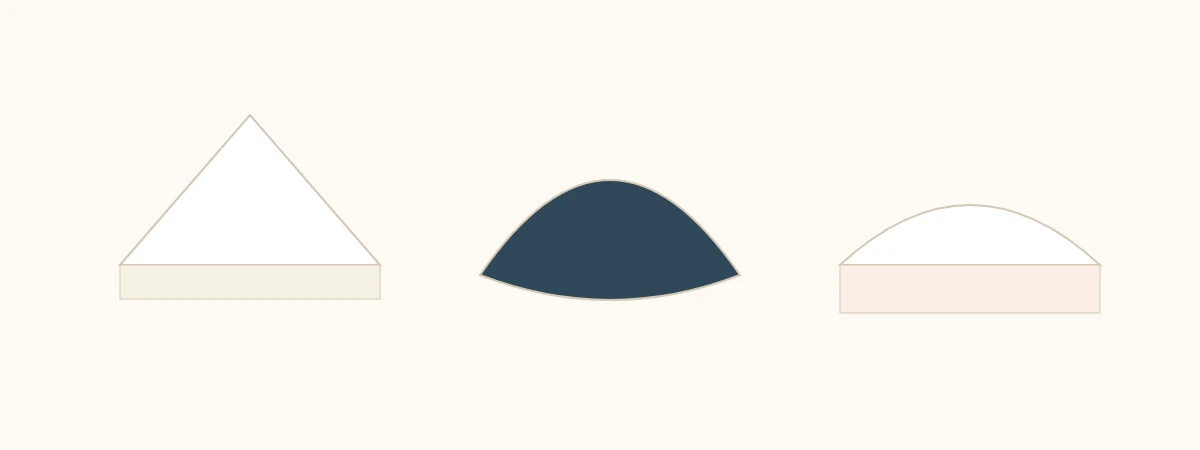
It is the same hat, worn sideways: instead of the points sitting at the sides of the head, they point to the front and back.
Two changes improve the result:
- In step 3, fold the top corners slightly past the center line so they cross a little. The peak comes out sharper.
- After step 4, pull the two side points down and outward, exaggerating the bicorne shape.
Black paper, or newspaper painted black with poster paint, takes care of the look. A skull drawn or cut out and glued to the front finishes it.
Painter’s Hat
The painter’s hat is shallower and has a wider brim. Starting from the basic hat:
- In step 4, fold the strips up in three stages, building a thick, rolled brim instead of a single fold.
- Open the base and push the top inward, flattening the crown.
The result is closer to a cap than to a pirate hat and, with its reinforced brim, it holds up through longer wear.
Why the Hat Comes Out Crooked
Three causes, all found early in the folding:
- Uneven corners in step 3. If one corner crosses farther than the other, the whole hat ends up lopsided. Compare the two before you press.
- A first fold that is out of square. If the sheet was not folded exactly in half in step 1, nothing afterward will correct it.
- Strips of different widths. The front and back strips must be folded at the same height, or the brim will slant.
Making It Last Longer Than an Afternoon
Newspaper tears fast in real use, especially at the corners. Two simple fixes:
Reinforce the points. Put tape on the inside of the two side points, where the strain concentrates.
Kraft paper instead of newspaper. It is tougher, takes ink and paint, and already has a costume-like color. On the other hand, it is thicker, so the folds need to be creased hard.
With Kids
This is one of the best models to start with: five folds, big paper, no demand for precision, and a result you can put on right away. It works from about age four with help on the first two folds.
One approach that tends to pay off: each child makes a hat, paints it or writes a name on it, and the activity carries on as play. More ideas by age group are in origami with kids.
And since the hat is half a boat, it is worth showing what comes next: unfolding the hat and carrying on to the boat tends to get a look of surprise, which is exactly the point.
The Samurai Helmet
There is a traditional Japanese paper hat, the kabuto, that represents the helmet worn by samurai. It starts from a square, not a rectangle, and is one of the best-known models in Japan, traditionally associated with Children’s Day, celebrated in May.
- Fold the square along a diagonal, forming a triangle with the long edge at the top and the point facing down.
- Fold the two top points down to the bottom point. The shape becomes a smaller square, sitting like a diamond.
- Fold those same two points back up to the top corner. These are the helmet’s two horns.
- Spread the horns to the sides, folding them diagonally from the center. The wider you open them, the wider the helmet.
- Fold the bottom point of the front layer up, stopping a little below the top edge.
- Fold that same flap up once more, now over the edge, forming the helmet’s front band.
- Fold the remaining bottom point inside, hiding it between the layers.
- Open the base and put it on.
For an adult kabuto, the square needs to be at least 20 inches (50 cm) on a side, which means wrapping paper, poster paper, or a newspaper spread trimmed to a square. In 6-inch (15 cm) paper, it becomes a table decoration.
Because it uses only folds and no cuts, it is an origami model in the strict sense, unlike the newspaper hat, which depends on a rectangular sheet of a particular proportion.

Frequently asked questions
What size paper do I need for the hat to fit?
A full newspaper spread, opened out, makes an adult hat. For a child, use half a spread. As a practical rule, if the long side of the paper is under 16 inches (40 cm), the hat will only fit a doll.


